How Weather Affects Your Flight
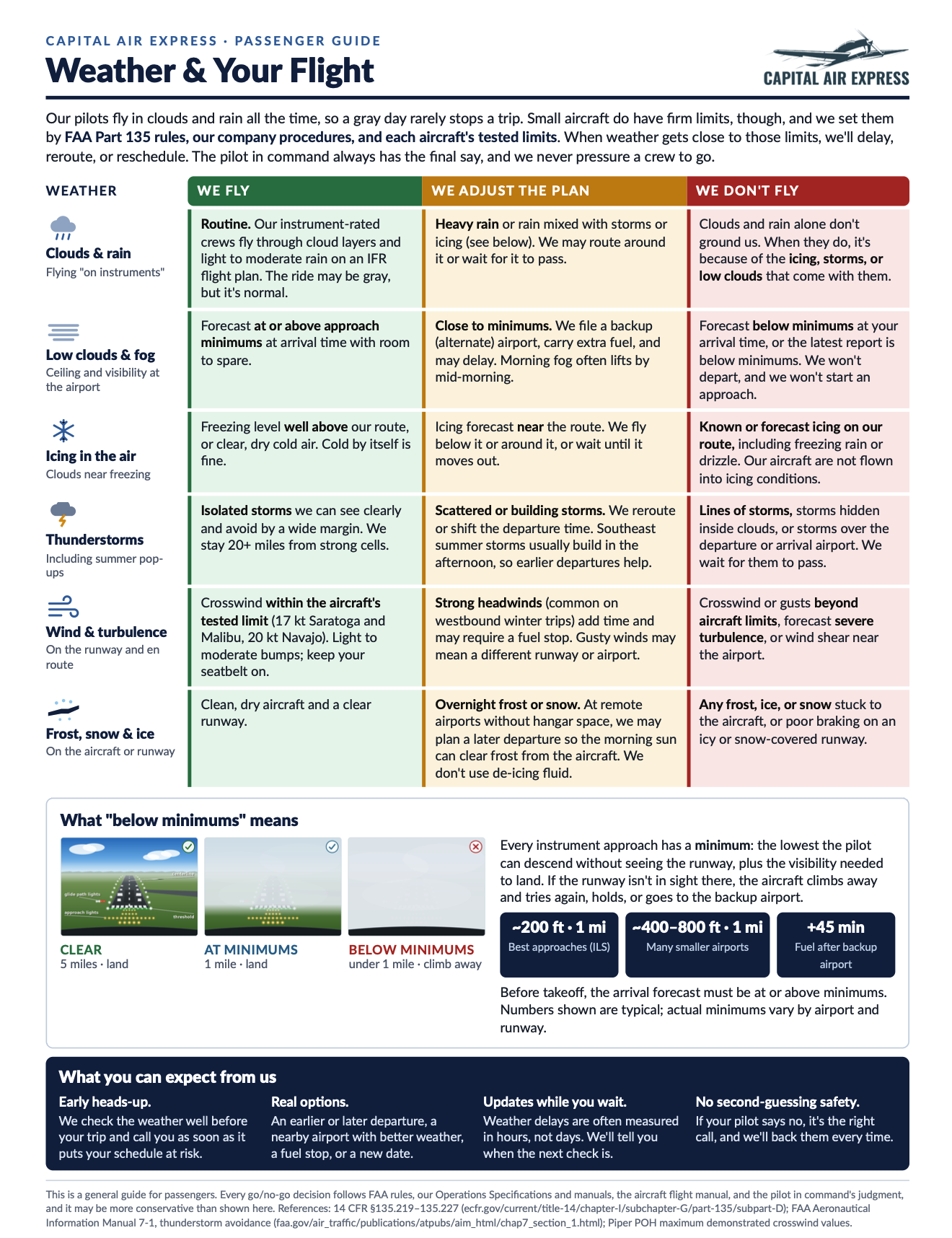
Weather is one of the biggest variables in aviation, but bad weather does not automatically mean a cancelled flight. Our pilots routinely fly in clouds and rain using instrument flight rules (IFR), and many days that look unpleasant from the ground are perfectly safe for flying. What matters is not simply whether it is raining or cloudy, but whether conditions remain within FAA regulations, Capital Air Express operating procedures, the limitations of the aircraft, and the judgment of the pilot in command.
The guide above is designed to show the difference between weather we can comfortably operate in, weather that may require us to adjust the plan, and conditions in which we simply will not fly. Sometimes an adjustment is as simple as leaving an hour earlier, waiting for fog to lift, routing around thunderstorms, using a nearby airport, or adding a fuel stop because of strong headwinds. Weather delays are also often measured in hours rather than days, which is why we continue monitoring conditions and updating you when a trip is affected.
Some conditions, however, create firm boundaries. Our aircraft are not flown into known or forecast icing, we maintain significant distance from strong thunderstorms, and we will not operate when winds, turbulence, runway conditions, or airport visibility fall outside safe operating limits. Low clouds and fog are a little more complicated: every instrument approach has specific minimums for how low a pilot may descend without seeing the runway and how much visibility is required to land. If conditions don't support a safe approach, we don't simply "give it a try"—we wait, reroute, or make another plan.
We also don't want customers to feel pressured to travel when weather is a concern. There are no cancellation fees or penalties when a customer cancels a flight due to weather. Payments are not refunded for weather cancellations, but the full amount paid remains as a credit on your account and can be applied toward a future flight. This gives you the flexibility to make the decision that feels right for your plans without worrying about losing the value of your trip.
Most importantly, the pilot in command always has the final say. Our operations team begins watching weather well before your scheduled departure and will contact you as soon as we believe it could affect your plans. We will work with you to find reasonable alternatives whenever possible, but we will never pressure a pilot to make a flight or second-guess a safety decision. The goal of this guide is to help you understand what we're looking at behind the scenes—and why sometimes the safest answer is simply to give the weather a little time.
Standard Operating Hours & Early/Late Flights
Capital Air Express typically schedules departures no earlier than 7:00 AM and plans flights to arrive at their final destination no later than 10:00 PM. These aren't hard curfews, but they are the standard operating hours we use when building passenger itineraries.
The reason is simple: your flight is only part of your pilot's workday. Before passengers ever arrive, our pilots may be checking weather, reviewing the flight plan, preparing and inspecting the aircraft, fueling, or repositioning from another airport. After your flight lands, they may still need to secure or reposition the aircraft and complete post-flight responsibilities. A 7:00 AM passenger departure can mean a workday beginning well before sunrise, while a 10:00 PM arrival can mean the pilot's day doesn't actually end until considerably later.
Why We Limit the Length of the Day
FAA regulations establish limitations on pilot duty and required rest, but at Capital Air Express, we intentionally plan our schedules more conservatively. Our standard company policy generally limits a pilot's duty day to 12 hours, rather than scheduling to the maximum allowable duty period.
That gives our pilots additional margin for unexpected weather, ATC delays, maintenance issues, passenger delays, and other circumstances that can extend a day beyond the original schedule.
It also helps us manage something equally important: fatigue. Flying requires sustained attention and good decision-making, and those things matter just as much on the last flight of the day as they do on the first.
Early Morning & Late-Night Flying
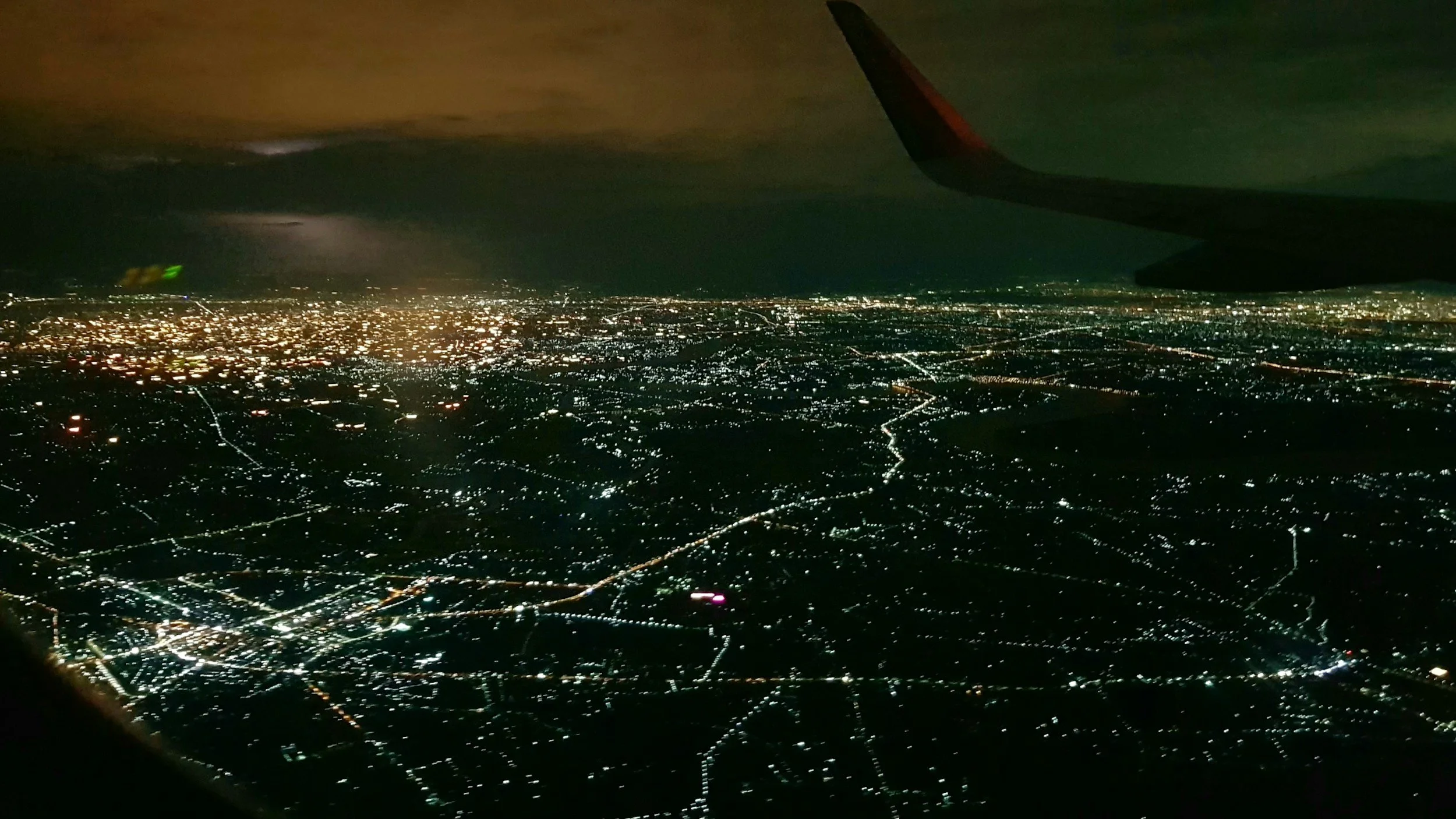
Our aircraft and pilots are fully capable of operating at night, and nighttime flying is a normal part of our operation. However, flying after dark comes with additional considerations. Visual references are reduced, weather may be more difficult to identify visually, and smaller regional airports may have limited staffing, fuel, ground services, or other resources available very early or late at night.
When nighttime operations are combined with a particularly early start or the end of a long duty day, fatigue becomes an additional consideration. For that reason, we don't routinely build itineraries that depend on extremely early departures or very late arrivals.
Can We Fly Earlier Than 7:00 AM or Arrive Later Than 10:00 PM?
Sometimes, yes. These are our standard scheduling guidelines, not absolute operating restrictions.
We evaluate early-morning and late-night requests individually based on the complete itinerary, pilot scheduling and duty time, aircraft positioning, airport availability, weather, and other operational considerations.
Additional charges may apply when accommodating a request requires special crew scheduling, an overnight stay, or repositioning. We'll let you know when that's the case before your trip is finalized.
SAFETY SETS THE SCHEDULE
Private charter is designed to give you significantly more flexibility than airline travel, and we'll always make a reasonable effort to accommodate the schedule you need. But flexibility shouldn't come at the expense of good safety practices.
Our 7:00 AM to 10:00 PM standard operating window gives our pilots and operations team room to manage the unexpected without routinely pushing crews to the edges of their duty day. It allows us to be flexible when circumstances require it while maintaining the safety margins we believe are appropriate for our operation.
Sometimes we can make 6:00 AM work. Sometimes we can get you home at midnight. But we don't build our everyday operation around asking pilots to do either—and that's intentional.